The Underrepresentation of Women in STEM Today
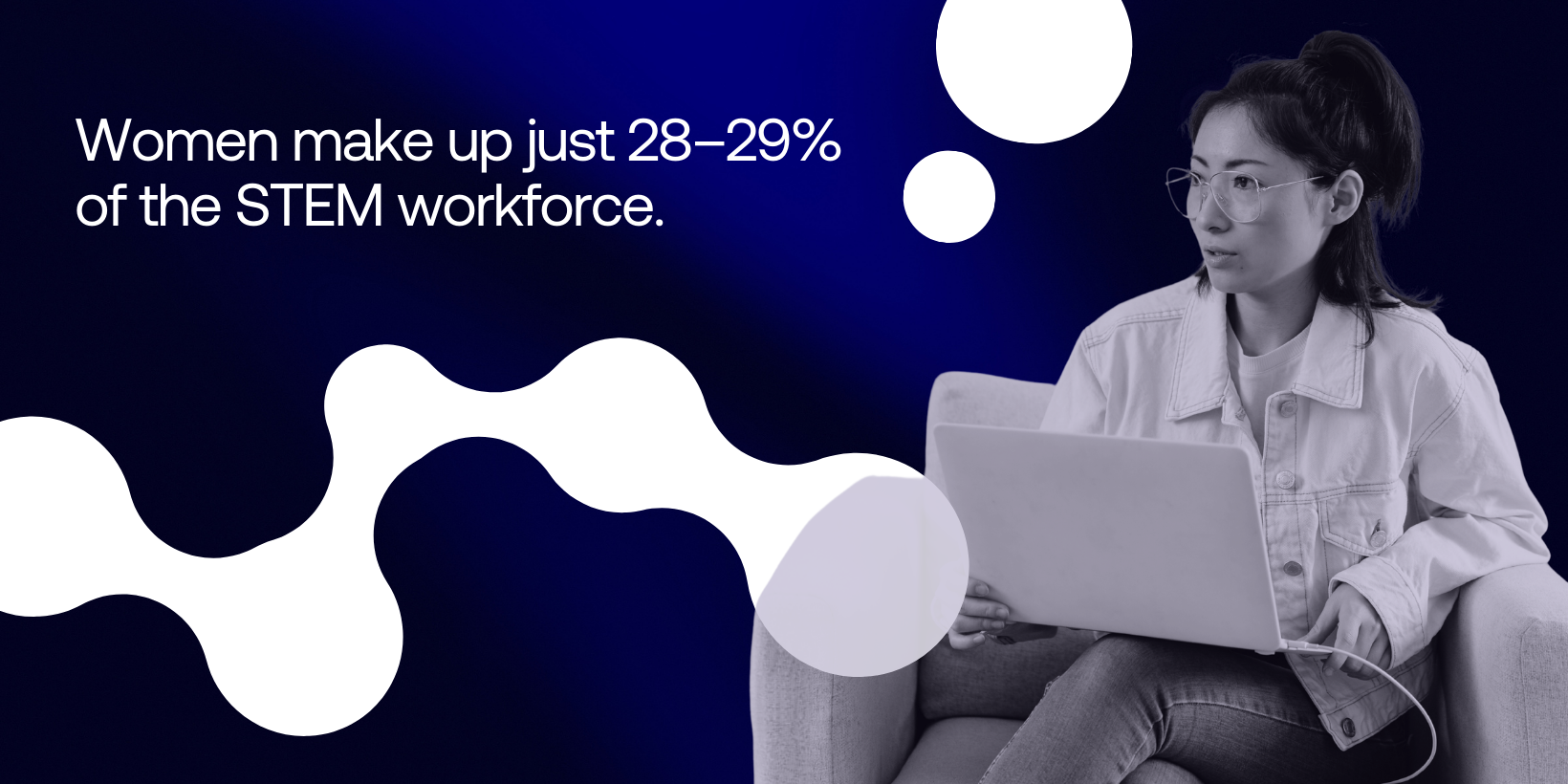
Despite progress in recent years, recent studies make one thing clear: women remain significantly underrepresented in STEM.
- According to UNESCO’s Institute for Statistics and analyses cited by the Society of Women Engineers, women account for only about 28–31% of the global STEM workforce and of science and engineering roles in Research & Development (R&D).
- According to recent global STEM and women‑in‑tech reports, in many high‑growth fields such as engineering, computer science and artificial intelligence, women’s participation often falls below 20% of students, professionals or researchers, depending on the country and discipline.
- UNESCO data show that in regions such as Central Asia and Latin America & the Caribbean, women’s share among researchers is close to or above parity (around 45–50% or more), whereas in regions like East Asia & the Pacific and South & West Asia, women still represent considerably less than one‑third (around 26–27%) of R&D personnel.
Put simply: the “talent pipeline” (STEM education) is improving, but the leaks along the way – in academic progression, research, leadership and tech careers, remain huge. The well‑known “leaky pipeline” means we are losing valuable scientists, engineers, researchers and technology leaders at every stage.
Why Equal Inclusion of Women in STEM Is a Priority Today
The conversation about women in science is not just a question of “fairness”. It’s also a question of the quality of the solutions we deliver.
- Better innovation: Data from international organizations consistently show that diverse teams produce more creative, more reliable and more resilient solutions.
- Fair technology: From artificial intelligence to telecom networks, when women are missing from the table, existing biases are amplified, in the data, in the models and in the algorithms.
- Growth and competitiveness: Countries and companies that invest in gender equality in STEM see higher productivity, stronger talent attraction and more sustainable growth.
Equal inclusion of women in STEM is not a distant goal for an abstract future.
It is an immediate requirement if we want to design networks, infrastructures, AI systems and connectivity services that truly work for everyone.
Women Who Have Shaped, and Are Shaping Technology
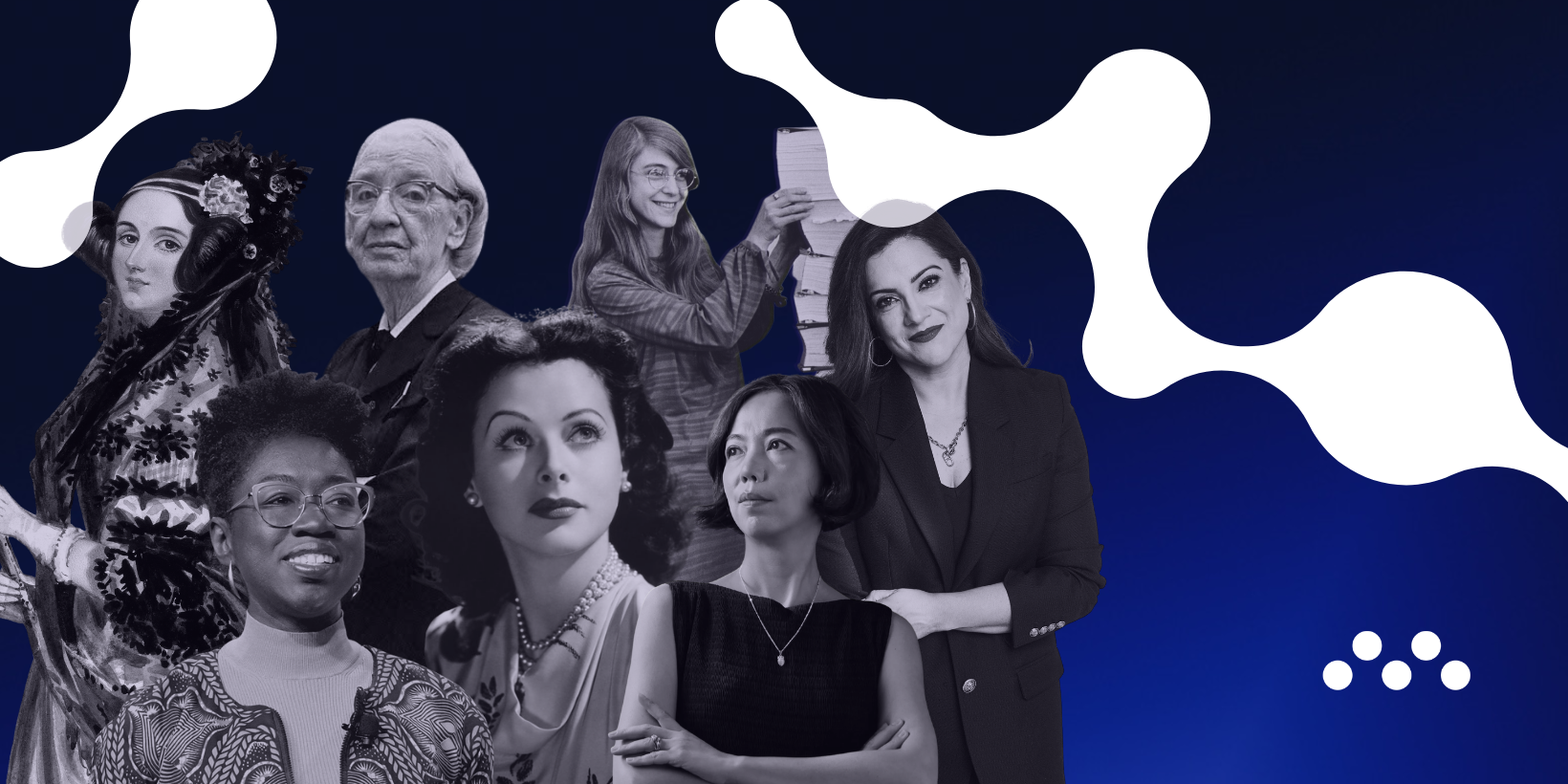
To understand how deeply women’s contributions are woven into the history of science and technology, we only need to look at a few of their stories.
Ada Lovelace: The First Programmer
Ada Lovelace is widely regarded as the first computer programmer. In the mid‑19th century, she described algorithms for Charles Babbage’s Analytical Engine – long before electronic computers existed as we know them today. She saw computation not just as arithmetic, but as a new language of expression, capable of “translating” ideas and patterns. With this vision, she laid the groundwork for what we now call software.
Grace Hopper: Bringing Code Closer to People
Grace Hopper was one of the most influential figures in the history of programming. At a time when code was extremely complex and far removed from everyday language, she envisioned programming languages that would be closer to how people actually think and speak. She was a pioneer of COBOL, helping make programming more accessible to more people and businesses. In doing so, she opened the door to the business information systems that powered the digital transformation of companies around the world.
Hedy Lamarr: The Mind Behind Wi‑Fi
Hedy Lamarr became famous as an actress, but her contribution to technology is just as (if not more) impressive. During World War II, she conceived and helped develop a “frequency‑hopping” system for more secure wireless communications. Her ideas became a foundation for technologies such as Wi‑Fi, GPS and Bluetooth, in other words, for the connectivity we take for granted today.
Margaret Hamilton: The Code That Took Us to the Moon
Margaret Hamilton led NASA’s software engineering team for the Apollo program. The code her team wrote enabled Apollo 11 to land safely on the Moon, even when the onboard systems were hit with unexpected data overloads just before descent. Her decisions in software architecture and error handling are now considered classic examples of systems engineering. Without them, the history of space exploration might have turned out very differently. No women. No Moon.
Reshma Saujani: Building the Next Generation
Reshma Saujani is the founder of Girls Who Code, an organization that makes programming and technology accessible to girls around the world. Through educational programs and communities, it turns learning into empowerment, and into real career paths. By challenging the “fear of failure” and the stereotype that “a programmer is a man”, she is opening the way for a new generation of women in software.
Fei‑Fei Li: Human‑Centered AI
Fei‑Fei Li is a researcher who has played a pivotal role in advancing artificial intelligence for computer vision, through work such as ImageNet. Her research helped trigger the boom in computer vision applications, yet she consistently advocates for the idea of human‑centered AI: artificial intelligence designed with respect for people, privacy and social justice. She reminds us again and again that AI is a human responsibility, not just a technical achievement.
Joy Buolamwini: Justice in the Algorithms
Joy Buolamwini is the founder of the Algorithmic Justice League and one of the most prominent voices on fairness in AI. Her research showed how facial recognition systems have significantly higher error rates for women and for people with darker skin tones, exposing the biases embedded in data and algorithms. Through her work, she demonstrates in practice that ethics and justice are an integral part of innovation, not something we tack on at the end.
Why This Day Matters for Technology & Telecommunications
In industries like telecommunications, networks, VoIP telephony, contact centers and artificial intelligence, the absence of women has very real consequences:
- Less diversity in the teams designing network infrastructures, cloud contact centers and AI solutions.
- Higher risk of bias in data and algorithms, when the lived experience of half of society is not adequately represented.
- Lost innovation in sectors that rely precisely on connectivity and collaboration.
Put simply: a sector that promises to connect everyone cannot afford to leave so much talent off the grid.
From Recognition to Action
The International Day of Women and Girls in Science is not just symbolic. It’s a reminder that:
- Equal access to STEM education and careers should be the norm, not the exception.
- Organisations need real inclusion policies, mentoring, equal opportunities for advancement, pay transparency, and safe, inclusive workplaces.
- Women’s participation in designing technology makes that technology fairer, safer and more reliable for everyone.
The history of science and technology is already full of women who opened new paths, from the first algorithm to Wi‑Fi, space missions and human‑centered AI.
The challenge today is not only to honour them, but to ensure that the women and girls entering STEM now have equal access, equal opportunities and a visible role in everything we are building for the future.